

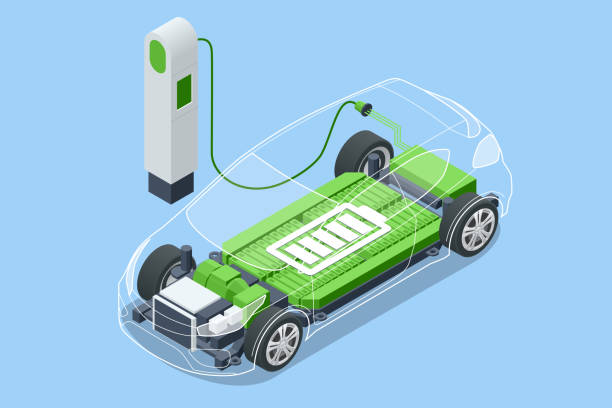
The global shift toward electric vehicles (EVs) is a critical pillar of any Low-Carbon Future. While EVs eliminate tailpipe emissions, making them a clear environmental winner in the use phase, a persistent question remains: are they truly eco-friendly when considering the energy-intensive process of battery production? The answer is complex, hinging on sourcing, manufacturing energy, and, most crucially, the Circular EV Economy surrounding the battery’s end-of-life.
For the country of Georgia, located at the crossroads of Europe and Asia, this question presents a unique set of challenges and massive strategic opportunities. While not a large-scale EV manufacturer itself, Georgia is a key player in two vital areas: the sourcing of Critical Minerals for batteries and the national push, supported by international partners, to build a circular economy from the ground up.
The Mineral Foundation for a Global EV Hub
The initial phase of an EV battery’s life—extracting and processing critical minerals—is energy-intensive. While Georgia's own transport sector relies heavily on imported fossil fuels, the country's geology offers a powerful contribution to the global green transition.
Georgia is home to one of the world's largest deposits of high-grade manganese in the Chiatura region. With over 200 million tonnes of ore, this resource is gaining immense attention as a "new lithium." Manganese is a key component in promising battery chemistries, such as Lithium-Manganese-Iron-Phosphate (LMFP) cells, which offer a more stable, cost-effective, and potentially less environmentally burdensome alternative to traditional Nickel-Cobalt-Manganese (NCM) batteries.
By positioning itself as a strategic and sustainable supplier of this critical mineral, Georgia can directly influence the carbon footprint of millions of EV batteries manufactured globally. The challenge lies in ensuring that these mining operations themselves adhere to the highest environmental standards, preventing local pollution while contributing to global decarbonization.
Closing the Loop: A National Priority
The environmental ledger of EVs tips definitively toward 'eco-friendly' only when a robust Circular EV Economy is established for battery end-of-life. This is where Georgia faces its most significant challenge and its most recent call to action.
Currently, Georgia's national circularity rate is low, at just 1.48% (compared to the EU's 11.5%). The management of complex waste streams, including batteries and end-of-life vehicles, has been identified as a national weakness.
However, a major new initiative launched in late 2025 by the European Union (EU) and the United Nations (UN) aims to fundamentally change this. This program is designed to help Georgia:
-
Boost recycling and cut waste.
-
Establish robust Extended Producer Responsibility (EPR)
-
Build the necessary infrastructure and public awareness to create a just and effective circular transition.
This initiative provides the framework to build a Battery Recycling industry that does not yet exist at scale. The goal is to create systems that can one day recover valuable materials from spent EV and hybrid batteries—which are growing in number from imported vehicles—and feed those Critical Minerals back into the supply chain, creating a true, closed loop.
Sustainable Mobility: The Path Forward
While a domestic EV manufacturing industry isn't the current reality, Georgia is actively tackling transport emissions through a focus on Sustainable Mobility. In major cities like Tbilisi and Batumi, projects are underway to modernize public transportation, introducing new, more efficient buses and improving urban mobility.
This "public-transport-first" approach, combined with the strategic development of its mineral resources and the new EU-backed push for a circular economy, forms Georgia's unique template. The nation's role may not be in assembling the EVs, but in powering them with its minerals and providing a future blueprint for how to responsibly manage them at the end of their life.
If you could enact one new policy to accelerate the Circular EV Economy in Georgia, would you prioritize offering incentives for sustainable manganese mining or providing government grants to build the country's first large-scale battery recycling facility? Share your strategic opinion in the comments and check out AsiaCarGroup for more!